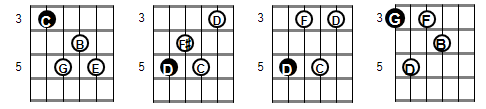
Voice leading creates smooth transitions between chords by moving each voice as little as possible.
Voice Leading Rules
• Keep common tones in the same voice.
• Move the remaining voices by the shortest possible distance.
Common Progressions
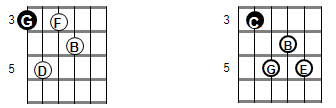
Perfect Cadence
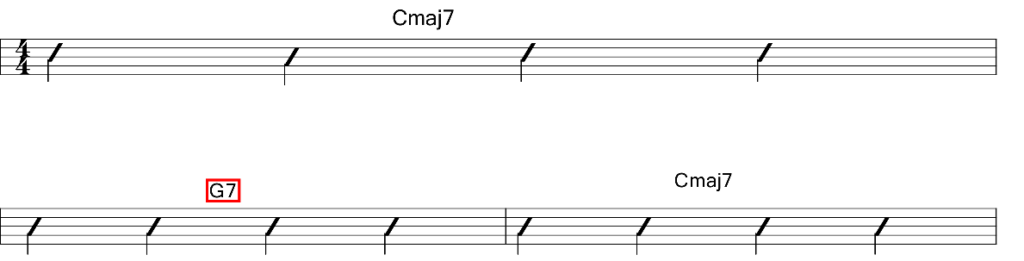
Any diatonic chord can be preceded by its V7.
V7 → Target Chord
ii-V Progression
A dominant chord is commonly preceded by its ii7.
ii7 → V7 → I
This is one of the most common progressions in jazz.

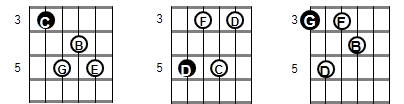
IV as a Predominant
The IV chord often precedes the dominant in classical harmony.
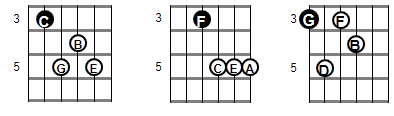
IV → V7 → I
Because ii7 and IV share the same subdominant function, they are interchangeable.
ii7 ⇄ IV

Functional Substitutions
Any diatonic chord may be replaced by another chord from the same tonal family to improve voice leading or strengthen root movement by fourths.
Examples:
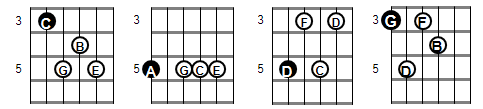
I ⇄ vi
(Cmaj7 ⇄ Am7)

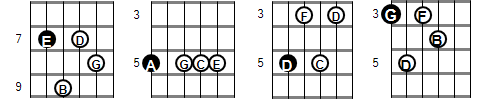
I ⇄ iii
(Cmaj7 ⇄ Em7)

Secondary Dominants
Any diatonic chord may be preceded by its own dominant seventh chord.
This dominant is called a Secondary Dominant.
Example:
A7 → Dm
(V7/ii)

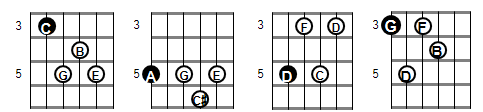
The primary dominant G7 also has its own dominant:
D7 → G7 → Cmaj7
D7 is written V7/V because it resolves to the dominant.

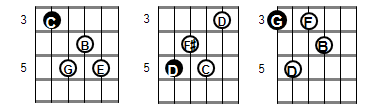
Relative ii-V Progressions
A secondary dominant is frequently preceded by its related ii7, creating a complete ii-V progression.
Example:
Am7 → D7 → G7 → Cmaj7
The Am7 is called the relative ii7 because it is the ii chord associated with the secondary dominant D7.