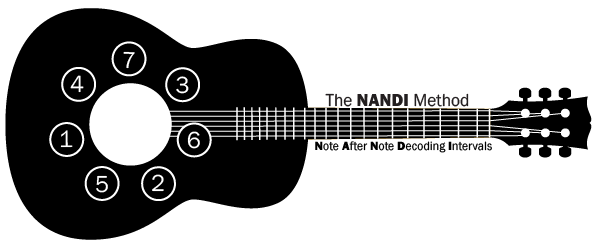
Interval Wheel
Relationship of Fourths, Fifths, and Half-Steps
The Interval Wheel summarizes the interval patterns found throughout the NANDI Method. By following different paths around the wheel, you can quickly visualize interval relationships and apply the same patterns to the fretboard.

Chromatic Pattern
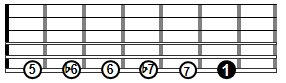
Starting at the center and moving outward follows the chromatic scale, with each ring representing one half-step.
Example:
1 → 7 → ♭7 → 6 → ♭6 → 5 → ♭5 → 4…
This is the same sequence you would play by moving one fret at a time on a single string.
Fourths
Moving clockwise follows the interval pattern of fourths.
Example:
1 → 4 → ♭7 → ♭3 → ♭6 → ♭2 → ♭5

Fifths
Moving counterclockwise follows the interval pattern of fifths.
Example:
1 → 5 → 2 → 6 → 3 → 7
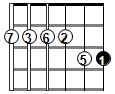
Fourths and Fifths on the Fretboard
These same relationships appear on the guitar.
• Reading across the strings from low to high follows ascending fourths.
• Reading the same pattern in reverse follows descending fifths.
Minor Sevenths
Skip every other interval while moving clockwise.
Example:
1 → ♭7 → ♭6 → ♭5 → 4…

Major Seconds
Skip every other interval while moving counterclockwise.
Example:
1 → 2 → 3 → ♯4…

Minor Thirds
Skip two intervals while moving clockwise.
Example:
1 → ♭3 → ♭5 → 6…
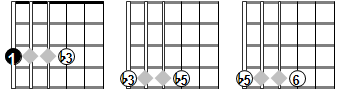
Major Sixths
Skip two intervals while moving counterclockwise.
Example:
1 → 6 → ♭5 → ♭3…
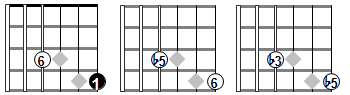
Summary
The Interval Wheel reveals multiple interval patterns from a single diagram.
• Move outward = Chromatic scale (half-steps)
• Move clockwise = Fourths
• Move counterclockwise = Fifths
• Skip 1 clockwise = Minor 7ᵗʰs
• Skip 1 counterclockwise = Major 2ⁿᵈs
• Skip 2 clockwise = Minor 3ʳᵈs
• Skip 2 counterclockwise = Major 6ᵗʰs
As you continue through the NANDI Method, these same interval paths will become the foundation for locating notes, building scales, constructing chords, and navigating the fretboard without relying on memorized shapes.